If you’ve ever stood in a cold, white pharmaceutical manufacturing facility, watching vials glide down a stainless steel line like tiny, precise passengers on a mission, you might’ve wondered: do these liquid packaging machines have to be custom-built only for pharma, or can the equipment a reputable liquid packaging machine supplier offers actually work here? As someone who’s spent the last 12 years troubleshooting, selling, and refining these machines for food, cosmetic, and now pharma clients, I get how murky that line can feel. There’s this pervasive myth that liquid packaging machines are either “general” (cheap, fast, good for sauce or lotion) or “pharma-grade” (rare, overpriced, locked to one use case). The truth? It’s way more nuanced—and if you’re a pharma professional looking to scale without breaking the bank, the answer might surprise you. Liquid Packaging Machine
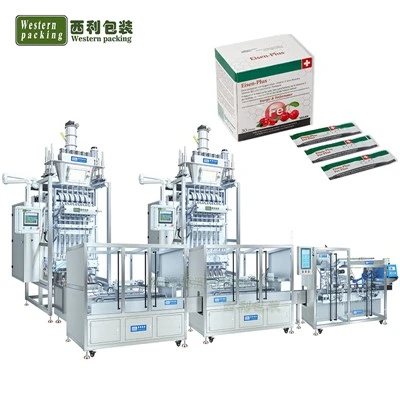
First, let’s cut through the noise: pharmaceutical packaging isn’t just about putting liquid in a bottle. It’s about compliance that can make or break a drug’s ability to hit the market. The U.S. FDA’s Current Good Manufacturing Practices (cGMP) for finished pharmaceuticals outline strict rules for equipment design: surfaces must be non-porous to resist contamination, moving parts must be easy to clean and sanitize, material compatibility with drugs (even sensitive ones like monoclonal antibodies or IV solutions) is non-negotiable, and every step of the process—from filling volume accuracy to line speed—must be trackable and auditable. That’s a high bar, but it’s not one that only custom-built pharma machines can clear.
Let’s start with the basics of how liquid packaging machines work, because the magic of adapting them to pharma lies in the details. A standard liquid packaging line, the kind you’d find in a sauce factory, is built around a core system: a filling station that dispenses exact volumes, a conveyor to move containers, a capping station, a labeling unit, and a final check for defects. The same core mechanics work for pharma—you just have to tweak parts to meet regulatory standards, right? For example, a filler that works for tomato sauce (thick, acidic) might need a different pump for a thin IV solution, but the technology behind that pump (peristaltic, piston, gravity) is proven across industries. The key difference is that pharma-grade machines have design overrides that general-purpose lines don’t. As a supplier, we’ve seen clients try to repurpose a standard liquid filler for a clinical trial batch of eye drops, only to run into issues with cross-contamination from residual cleaning solution left in a crevice, or volume variation that would fail FDA testing. But that’s not because the machine is inherently bad—it’s because general-purpose lines skip the small, critical design choices that make pharma work.
Let’s talk about validation, because that’s the word every pharma professional lives by. When a manufacturer wants to get a drug approved, they have to prove every part of the process works consistently. That means your liquid packaging machine has to be easy to validate: you need documentation that shows it can be cleaned repeatedly without harboring microorganisms, that it dispenses the exact volume of drug every time within a 0.5% tolerance (a standard for most liquid pharmaceuticals), and that every part that touches the drug is made of materials that won’t leach chemicals into the product. General-purpose food-grade machines often use cheaper plastics or coated metals that aren’t compatible with some pharma compounds, or have hidden gaps in the frame where product can get stuck during cleaning. But when we build our liquid packaging machines with pharma applications in mind, we engineer them for validation from the start. For example, we use 316L stainless steel for all wetted parts— the same alloy required for pharma contact surfaces—instead of the cheaper 304 stainless used in many general lines. We also design no hidden crevices, seams welded smooth, and removable parts that fit into standard cleaning-in-place (CIP) systems, which pharma facilities use to sanitize lines without taking them apart.
Wait, but what about specialized pharma products? Things like injectable drugs, vaccine vials, or even oral liquid medications for pediatric patients that require ultra-precise filling. Can a standard liquid packaging machine handle that? Let’s take injectables, for example. A lot of people think injectables need custom, million-dollar filling lines, but that’s not always the case for small to mid-sized batches or specialty drugs. A peristaltic pump, which is commonly used in both lab-scale pharma and small-scale cosmetic or biotech lines, is perfect for this. Peristaltic pumps work by squeezing a flexible tube to move liquid, so only the tube touches the product—no valves, no seals, no moving parts inside the liquid stream. That eliminates cross-contamination risk entirely, which is a big win for sensitive drugs. We’ve supplied several small biotech firms that make personalized cancer treatments with modified peristaltic liquid packaging machines originally designed for lab use, scaled to handle small production runs without sacrificing accuracy. The key modification we made was adding a built-in volume verification system that logs every fill in real time—something that general lines don’t come with, but that’s required for pharma records. The system auto-generates a report that can be submitted directly to the FDA during approval, so the client doesn’t have to build it from scratch.
Of course, there are limits. Not all general-purpose liquid packaging machines are suitable for pharma, and not all pharma applications can use adapted lines. For high-volume, large-scale production of common drugs like generic oral antibiotics, a custom pharma line might make more sense for speed and bulk compliance. But for small batches, clinical trial materials, specialty or orphan drugs, or mid-sized manufacturers looking to expand without the capital cost of a full custom line, an adapted liquid packaging machine works perfectly. Let’s talk about capital costs for a second, because that’s a huge pain point for many pharma clients. A custom pharma liquid packaging line can cost anywhere from $500,000 to $2 million, depending on the features. A mid-sized adapted line, built with pharma-compliant materials and features, runs a fraction of that—often between $100,000 and $300,000. That’s a game-changer for small biotechs or contract development and manufacturing organizations (CDMOs) that might only need to produce batches of 100,000 to 500,000 units a year, not millions.
Another big point: cleaning and sanitization, which is arguably the most important part of pharma packaging. The FDA has strict rules about “clean in place” (CIP) and “sterilize in place” (SIP) systems for equipment that touches drugs. General-purpose lines often don’t have built-in CIP capabilities—you have to take the line apart, clean each part manually, which is time-consuming and introduces human error. That’s a non-starter for pharma, where even a tiny amount of residual product or bacteria can lead to a batch being rejected, or worse, a safety issue for patients. When we design our liquid packaging machines for pharma, we integrate CIP ports directly into the line, so cleaning solution can flow through every wetted part automatically. We also use materials that can withstand high-temperature CIP cycles (often 80°C to 120°C) and chemical sanitizers common in pharma, like 70% isopropyl alcohol or hydrogen peroxide. Some of our clients in the vaccine space even use our lines for filling bulk vaccine stocks, with additional SIP capabilities we can add as a modular feature—no need to replace the entire line, just upgrade a few components.
Wait, let’s address the elephant in the room: risk. A lot of pharma quality control teams are scared of using non-custom equipment, because if something goes wrong, the entire batch is ruined, and the cost of a bad batch is astronomical. A batch of a new orphan drug can cost tens of thousands of dollars to produce, so downtime or defects are not an option. That’s why as a liquid packaging machine supplier, we build pharma-adapted lines with traceability as a core feature. Every fill, every cap, every label has a unique identifier that links to a batch record. If there’s a defect in one vial, you can trace it back to the exact time it was filled, the exact machine it was on, and even the exact batch of product that was used. That level of traceability isn’t standard on general lines, but we add it because we know pharma clients need it. We also offer full validation support: we work with our clients’ quality teams to create all the required documentation, from design qualification to performance qualification, so they don’t have to navigate the FDA’s paperwork alone. Many suppliers will sell you a machine and leave you to figure out the validation, but that’s not how we operate. We’ve built our reputation over years by standing by our equipment through every step of regulatory approval.
Let me give you a real example, because concrete stories make this real. A client of ours a few years ago was a small biotech firm developing a new oral liquid medication for pediatric epilepsy. They were in clinical trials, so they only needed to produce 20,000 units a month, and their budget for packaging equipment was way lower than what a custom pharma line would cost. They initially tried using a general-purpose liquid packaging machine for a personal care product, but within a month, they hit a wall: the stainless steel used for the filler’s piston was 304, which leached a tiny amount of nickel into the drug (not dangerous in large quantities, but enough to fail their internal quality testing). Also, the machine’s crevices were hard to clean, so they were getting cross-contamination between batches of different formulations. We worked with them to modify an existing liquid packaging machine we had in our catalog: we swapped out the 304 steel parts for 316L, welded all seams smooth, added a simple CIP system, and installed a basic volume-tracking software that could generate batch records. The total cost was a third of what they’d budgeted for a custom line. They used that machine through three phases of clinical trials, and when they scaled to full commercial production two years later, they didn’t have to replace their line—they just added additional modules for labeling and serialization to meet new FDA track-and-trace rules. That’s the kind of flexibility general lines can offer, when adapted properly for pharma.
Of course, it’s not all smooth sailing. There are three key questions any pharma professional should ask before deciding if a liquid packaging machine is right for them, to avoid costly mistakes. First: Is the machine’s wetted material compatible with my drug? Some drugs, especially biologic ones like monoclonal antibodies, are sensitive to metal ions or certain plastics, so you need to confirm that every part that touches the product is made of materials that won’t interact negatively. Second: Can the machine’s accuracy and traceability meet FDA requirements? Filling volume accuracy is non-negotiable, and you need to know that every action on the line is documented. Third: How easy is it to validate and clean? If you can’t prove that the machine is clean and consistent, you won’t get regulatory approval, no matter how cheap the machine is. As a supplier, we make sure we can answer all three of these questions with a yes, but we also push back on clients who try to cut corners on these points—because a machine that works in the lab is useless if it can’t get approved for market.
Another thing that often gets overlooked is serialization and track-and-trace, which is a huge part of pharma packaging now. The Drug Supply Chain Security Act (DSCSA) in the U.S., and similar regulations around the world, require every prescription drug to have a unique serial number on its packaging, so it can be tracked through the supply chain to prevent counterfeits. General-purpose liquid packaging machines rarely come with serialization capabilities, but they’re easy to add as a modular feature. We’ve integrated serialization units into our adapted lines without disrupting the filling process, so clients don’t have to replace their entire line to meet new rules. That’s a huge benefit of choosing a liquid packaging machine supplier that designs their lines to be flexible, not one-size-fits-all.
I know there’s still skepticism out there, and that’s fair. Pharma is an industry where mistakes have real, life-changing consequences, so it makes sense that teams would be wary of adapting non-specialized equipment. But after 12 years in this space, I’ve seen hundreds of projects where a well-adapted liquid packaging machine works perfectly for pharma, saves clients hundreds of thousands of dollars, and delivers the same consistency and compliance as a custom line. It’s not that custom pharma lines are unnecessary—for large-scale production of high-volume, complex drugs, they’re often the right choice. But for small batches, clinical trials, specialty drugs, or mid-sized manufacturers looking to grow without overinvesting, adapted liquid packaging machines are a viable, cost-effective option.
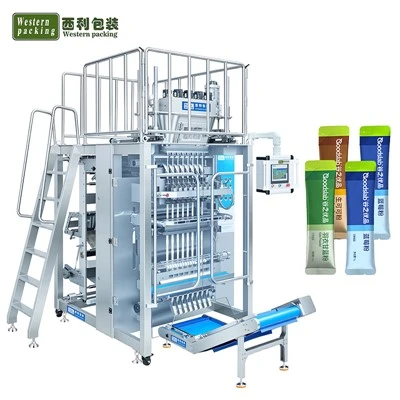
If you’re a pharma professional looking to upgrade your packaging line, or if you’re a biotech startup just getting off the ground and wondering what your packaging options are, don’t just assume that liquid packaging machines are either “general” or “pharma-only.” The key is to partner with a supplier that understands both the ins and outs of liquid packaging technology and the strict regulatory requirements of pharma. We’ve spent years refining our lines to meet FDA, EU GMP, and other global standards, while keeping the flexibility and cost-effectiveness that general-purpose lines offer. If you’re ready to stop overpaying for custom equipment that doesn’t fit your needs, or if you’re tired of general lines that fall short on compliance, let’s talk. We can walk through your specific application, help you figure out if an adapted liquid packaging machine is right for you, and build a solution that fits your budget, your production volume, and your regulatory requirements.
Powder Packaging Machine References
- U.S. Food and Drug Administration. (2023). Current Good Manufacturing Practices (cGMP) for Finished Pharmaceuticals. 21 CFR Part 210.
- International Society for Pharmaceutical Engineering (ISPE). (2021). Risk-Based Manufacturing of Liquid Dosage Forms. ISPE Good Practice Guide.
- European Medicines Agency (EMA). (2022). Annex 1: Manufacture of Sterile Medicinal Products. EMA/CHMP/QWP/251344/2006 Rev. 2.
- U.S. Food and Drug Administration. (2021). Drug Supply Chain Security Act (DSCSA) Final Rule. 21 CFR Part 203.
- Peri, G. (2020). Adaptable Liquid Filling Technologies for Biopharmaceutical Clinical Trial Batches. Journal of Pharmaceutical Innovation, 15(3), 289-297.
Guangzhou Western Packing Co., Limited
Guangzhou Western Packing Co., Limited is one of the most professional liquid packaging machine manufacturers and suppliers in China, also supports custom service. With abundant experience, we warmly welcome you to wholesale durable liquid packaging machine at competitive price from our factory.
Address: No.3, Yilong street, Wulonggang, Zhongluotan Twon, Baiyun District, Guangzhou
E-mail: david@westernpacking.com
WebSite: https://www.westernpackingusa.com/
