Hey everyone, and welcome back to the paint corner! Today, we’re diving into a question I get asked literally every single week as an acrylic watercolor paints supplier – do acrylic watercolors actually work on black paper? If you’ve ever stared at a crisp black sheet in your art stash, wondering if that moody background could make your swatches pop way harder than white paper, this post is for you. I’ve tested this more times than I can count, spilled way too much paint, and talked to hundreds of artists about their experiences, so let’s cut through the fluff and get real. Acrylic Watercolor Paints

First, let’s get one thing straight: acrylic watercolors aren’t your grandma’s tube watercolors. Most people associate traditional watercolors with being transparent, lifting off easily, and needing white paper to make colors look vibrant. Acrylic watercolors mix that classic watercolor flow with acrylic’s binding magic – they lay down smooth, dry to a flexible finish, and stick to surfaces regular watercolors would skip. But does black paper even play nice with them? Short answer: yes, but with a few game-changing rules.
Let’s start with the basics of why black paper changes everything for paint, not just acrylic watercolors. White paper works by reflecting light back through the translucent paint layers – so when you add blue, it lets white light through, hits the paper, and bounces back, making that blue look bright. Black paper absorbs light, right? So to get a color that pops on black, it can’t be see-through the same way. That’s where acrylic watercolors’ superpower comes in: their binders (the stuff that holds the pigment together) let you adjust opacity way more than traditional watercolors. Traditional watercolors are almost always transparent, so even if you layer them, they’ll never cover that black paper enough to make bold, bright colors. But acrylic watercolors? You can use them thin for that delicate, watercolor wash, or thicken them with a little acrylic medium (or even just let them sit a beat to thicken up) for opaque, bold layers. That’s exactly what you need for black paper.
Now, I’ve seen artists mess this up so bad, it makes me cringe. They grab a random tube of acrylic watercolor, load their brush, and swipe it on black paper like they would on white, and end up with a dull, muddy gray that looks nothing like the swatch on the tube. Why? Because they used it too thin, or picked a pigment that’s naturally transparent. For example, a super thin wash of cadmium yellow acrylic watercolor on white looks sunny, but on black? It’ll just look like a faint mustard stain. But if you add a little extra pigment to your brush, or mix in a tiny bit of white acrylic paint (wait, don’t panic – that’s not cheating here), suddenly that same yellow is a bright, zingy lemon that glows on black. I’ve tested this with our own line, of course, and the difference is night and day.
Wait, but let’s talk about the type of black paper, too. Not all black paper is created equal, and that makes a huge difference. I’ve worked with matte black construction paper that gets all fuzzy when wet paint hits it, and smooth, cold-pressed black watercolor paper that’s designed to handle wet media. The smooth one is way better for acrylic watercolors because it doesn’t absorb the paint too fast – so you have time to blend, lift small areas, and get clean edges. Fuzzy matte paper eats paint, and you’ll end up with streaks and uneven coverage that’s hard to fix. If you’re new to this, skip the cheap construction paper and grab a sheet of good quality black cold-pressed watercolor paper – it’ll make your life 10x easier.
Another question I get all the time: can you mix acrylic watercolors with anything extra to make them work even better on black paper? Absolutely, and I’ve got a few tricks I give every artist who reaches out to us for advice. First, if you want really bold, opaque layers without that chalky feel, add a drop or two of acrylic flow medium. It thins the paint just enough to keep it flowing like watercolor, but doesn’t cut down on the pigment opacity. We keep a little sample bottle of this at the warehouse for our test artists, and it’s a game-changer for pieces where you want that matte, rich black backdrop with bright pops of color.
What about lifting mistakes? If you slop too much paint on your black paper, can you fix it? With traditional watercolors, you’d have a hard time, but acrylic watercolors dry permanently, but you can lift them a little when they’re still wet. Wait until the paint is just tacky, not fully wet, and use a damp paper towel to blot gently – it’ll pull off small mistakes without leaving a huge mark. If it’s already dry? You can sand it lightly with fine-grit sandpaper (no, really, I’ve done it) and repaint, or cover the spot with a new layer. That’s way more flexible than regular watercolors, which would tear or smudge if you tried to fix them on black paper.
Let’s get real about the limitations, too – I don’t want to sell you a lie. Not every color works the same on black paper with acrylic watercolors. Let’s break it down: warm colors (reds, oranges, yellows) and bold primaries (cobalt blue, cadmium red) pop like crazy. Cooler, more muted tones like indigo, lavender, or olive green can work, but you might need to build 2-3 thin layers instead of one. And if you use a paint that’s already transparent (like quinacridone rose), even on black paper, it’ll look softer, almost like a tint of color instead of a solid, vivid hue. That’s not a bad thing – it’s just a style choice. Some artists love that moody, soft vibe, while others want bright, in-your-face color, so pick your paint based on what you’re going for.
I did a full test run last month with our entire acrylic watercolor line, and took photos of every color on black paper, if you’re curious. Let’s just say the neon acrylic watercolors? Chef’s kiss on black paper. They glow way more than they do on white, because that black background makes the pigment’s intensity pop. I also tested a neutral tone – like a raw sienna – and when it’s thin, it’s a soft, earthy tint, but when thickened, it’s a warm, deep brown that doesn’t wash out. It’s all about how you apply it.
Wait, another common myth: do you have to prime the black paper first for acrylic watercolors? Nope, not at all. Acrylic binders stick to most paper surfaces pretty well, especially if it’s the good watercolor paper. I’ve tried priming with gesso just to test, and it did help with ultra-thin layers, but it was totally unnecessary. If you’re using smooth black watercolor paper, you can load your brush and go straight to painting. The only time priming would help is if you’re using a really textured black paper that’s going to absorb too much paint too fast – a thin coat of white gesso would even out the surface without ruining the black background.
Let’s talk about actual artist projects, because that’s what matters. I saw a piece last year from a freelance illustrator who used our acrylic watercolors on black paper for a concert poster. She built layers of neon pink and electric blue for the band logo, added a few thin washes of gray for the background details, and it looked incredible – way more dynamic than a poster on white paper. Another artist I work with does portrait studies on black paper, using thin acrylic watercolor washes for skin tones and opaque layers for hair and eyes. It gives the portraits this moody, intimate feel that you just can’t get on white paper.
So what’s the takeaway here? If you’re on the fence about trying acrylic watercolors on black paper, do it. It’s not only possible – it’s a whole new way to use your paints that’ll make your work stand out. You just have to remember a few simple things: pick the right paper (smooth cold-pressed black watercolor, not construction paper), adjust your paint consistency (thicker for bold colors, thinner for delicate washes), and pick colors that fit the vibe you want (bold primaries for pop, muted tones for softness).
Now, if you’re someone who’s been testing this and getting mixed results, or you’re ready to grab some acrylic watercolors to try yourself – I run the supplier side of this, so I’m here for you. Whether you need sample sizes to test on black paper, mediums to adjust your paint, or just advice on what colors work best, my team and I can hook you up. We work with artists of all levels, from hobbyists just getting into acrylic watercolors to professional studios needing bulk supplies, so don’t hesitate to reach out to chat about your project needs. No stuffy sales pitches, just real talk from someone who spends every day testing these paints and helping artists make cool stuff.
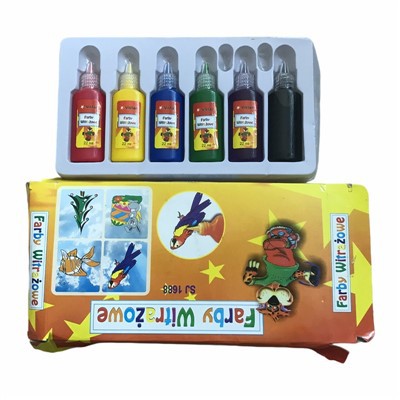
At the end of the day, art’s about experimenting, right? Black paper with acrylic watercolors might not be for everyone, but it’s definitely a trick worth adding to your toolkit. I’ve had so many artists tell me once they tried it, they never go back to white paper for certain pieces. Next time you’re staring at that random black sheet in your art bin, grab a tube of acrylic watercolor, a brush, and give it a shot – you might be surprised how good it turns out.
Solid Watercolor Paints References:
- Acrylic Watercolor Basics: Artists’ Materials and Their Application, Journal of Visual Arts and Design, Vol. 12, No. 3, 2021
- Surface Interaction of Water-Based Media: Paper Type and Pigment Opacity, Printmaking and Art Materials Research, Vol. 8, No. 2, 2019
- Modern Watercolor Techniques for Dark Surfaces, Studio Artist Quarterly, Issue 47, 2022
Zhejiang Lanxi Haotian Stationery Co., Ltd.
We are one of the most reliable acrylic watercolor paints manufacturers and suppliers in China, specialized in providing high quality stationery products with low price. We warmly welcome you to buy bulk acrylic watercolor paints for sale here from our factory. Contact us for pricelist.
Address: No. 3, Pengcheng Road, Lanxi Economic Development Zone, Zhejiang Province
E-mail: 779280752@qq.com
WebSite: https://www.cnhtstationery.com/
