If you’ve ever stood behind a sleek, modern Colorbond fence on a stormy summer afternoon, watching lightning streak across the sky, you’ve probably wondered the same thing I get asked a dozen times a week by homeowners and builders alike: Do these steel fences need to be grounded for lightning protection? As the owner of a Colorbond Fence supply company, I’ve spent years fielding this question, digging through Australian standards, talking to electrical engineers, and even troubleshooting a few real-world scenarios where fences took a hit from a thunderstorm. Today, I’m breaking this down not as a textbook, but as someone who sells, installs, and works with Colorbond fences every single day—no jargon, no hype, just straight answers based on what actually happens when lightning meets steel. Colorbond Fence
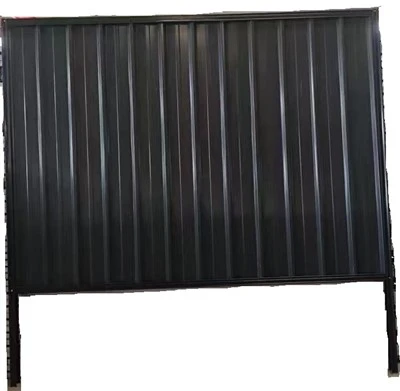
First, let’s get one thing straight: Colorbond isn’t just a random steel product. It’s a coated steel, designed specifically for Australian conditions by BlueScope Steel, and it’s used for everything from fences to roof sheeting, so we know it holds up to everything from coastal salt to extreme heat. The base material is zinc-coated steel, with layers of polymer paint on top to prevent rust. Now, steel is a great conductor of electricity—way better than the vinyl or wood fences many homeowners used decades ago. That conductivity is part of why Colorbond fences are so popular for large properties, commercial sites, and even residential backyards; they’re strong, durable, and can handle a lot of weight without bending. But conductivity is also the root of the lightning question.
Lightning is, at its core, a massive electrical discharge—most strikes are between 10,000 and 200,000 amps, and temperatures can hit 30,000 degrees Celsius. When lightning hits a structure, it’s looking for the path of least resistance to get to the ground. If a Colorbond fence is standing alone, with no other connection to the earth, what happens next depends on where the lightning hits. Let’s use a real example: Last year, a customer in the Sydney suburb of Richmond had a 1.8-meter high Colorbond fence running along the side of his property, standing about 5 meters from his house. A storm rolled through, and lightning struck a tree at the end of his fence line, traveled down the tree trunk, and jumped onto the top rail of the Colorbond fence. The fence didn’t “absorb” the lightning—it carried it across its length, right to the opposite end of the fence line. There, it jumped to a metal fence post that was driven into the ground, but that post was just a plain steel post, not a grounding electrode, so it couldn’t dissipate the current fast enough. The result? The paint on the top rail burned in a 2-meter strip, and a small spark jumped to the customer’s side gate, leaving a black mark that took weeks to polish off. No one was hurt, but it was a reminder that even indirect strikes can cause issues if the fence isn’t connected properly.
But before you go running to pull out a ground rod for your 50-meter fence, let’s talk about what Australian standards actually say, because that’s the part most DIYers and even some builders miss. The Australian Standard for Electrical Installations (AS 3000) has specific guidelines for lightning protection, but they only apply to structures like buildings, sheds, and communication towers. Fences, in general, aren’t classified as lightning protection structures unless they’re part of a larger system. That said, the standard does note that any conductive metal structure that’s within 2 meters of a building should be bonded to the building’s earth electrode—meaning connected with a copper cable, so electricity can flow safely to the ground instead of jumping to the building. That’s a key point I drill into every installer my company works with. If your Colorbond fence is within 2 meters of your house, garage, or shed, it’s not just a “nice to have” to bond it—it’s a recommendation to prevent side-flashes (what happened to the Richmond customer). If it’s more than 2 meters away? The rules get a little blurrier, but that doesn’t mean lightning can’t cause damage.
Now, let’s talk about the differences between a fence that’s grounded, bonded, and just sitting there. A lot of people mix up “grounding” (connecting directly to the earth via a metal rod) and “bonding” (connecting two conductive objects together). For Colorbond fences, most of the time, bonding is enough—especially if the fence is close to a building with a proper earth system. Grounding a fence on its own, though, can be risky if it’s not done right. A few years back, a builder in Melbourne called me panicking because he’d installed a 20-meter Colorbond fence along a rural property and driven two 2.5-meter ground rods at either end, connected with copper cable. A storm hit, and a direct lightning strike hit the middle of the fence. The fence carried the lightning to both ground rods, but the ground rods were in dry, sandy soil—common in rural areas—and soil resistance was really high. The current couldn’t dissipate into the ground fast, so it arced from the fence posts to the neighboring shed’s metal frame, burning a hole in the shed’s steel wall and melting a 10cm section of the fence rail. That’s the mistake a lot of people make: they think driving a ground rod fixes everything, but it only works if the soil can conduct electricity, and if the connection between the fence and the ground is properly sized.
So when does it actually make sense to ground a Colorbond fence? Let’s break down the scenarios where I’d recommend it, based on years of working with customers. First, if you live in a region with a high lightning flash density. The Bureau of Meteorology maps show parts of northern Australia (like Darwin, Townsville, and parts of Queensland) get more than 20 lightning strikes per square kilometer every year. In those areas, even fences not near buildings are at risk of either direct strikes or nearby strikes that induce current in the fence. Second, if your Colorbond fence is part of a larger lightning protection system for your property. For example, if you have a large shed or a communication tower that requires lightning protection, connecting the fence to that system gives it a safe path to ground without needing separate ground rods. Third, if your fence is on a property with no existing earth electrode—like a rural block far from any buildings. In that case, driving a properly sized ground rod (usually 2.5 meters deep, with a soil backfill that reduces resistance, like bentonite) at each end of the fence can help dissipate current. But even then, I always recommend talking to a licensed electrician before doing it—because if done wrong, it can make issues worse, not better.
Wait, but what about damage that’s not from big strikes? That’s another part people overlook. Colorbond’s coating is durable, but it’s not indestructible. When lightning current travels through a fence, even if it doesn’t cause a huge spark, it can generate enough heat to burn the polymer paint, leaving those unsightly black marks I see all the time. I had a customer in Perth last year with a 30-meter front fence, not near his house. A storm passed 5 kilometers away, and the fence absorbed the induced current from the electromagnetic pulse of the lightning. The paint on the middle rail had small, pinpoint burns all along 10 meters of the fence. He didn’t have a grounding system, and there was no direct strike—just the power of the electromagnetic field. That’s the kind of damage you don’t hear about in lightning stats, but it’s common, and it’s exactly why considering your fence’s placement and the electrical activity in your area matters.
Now, let’s get to the myths I hear all the time, because that’s where a lot of confusion comes from. Myth number one: All metal fences need to be grounded. No—vinyl and wooden fences don’t conduct electricity, so they’re not a risk, but Colorbond’s conductivity is a benefit most of the time. When lightning does hit a structure, having a nearby conductive fence can actually help redirect the current away from the house, as long as it’s properly connected. Myth number two: Grounding a fence will prevent all lightning damage. Wrong—no lightning protection system is 100% foolproof. Even the best bonding and grounding won’t save a fence from a direct strike, but it will reduce the risk of side-flashes to your home, and it will reduce the chance of paint burn from induced current. Myth number three: You need a big, expensive system to ground a Colorbond fence. Most residential applications only use a 6mm copper bonding cable, which is cheap and easy to install—way cheaper than repainting a 50-meter fence after a lightning strike.
As a Colorbond Fence supplier, I don’t want to scare anyone, but I also want to be honest. Last quarter, I had 12 customers reach out to me after storms to repair lightning-related damage to their Colorbond fences. Three of them had bonded their fences to their house’s earth, and their repair costs were minimal—just a spot touch-up on the paint. The other nine didn’t have any connection, and their repair costs averaged over $1,500 for replacing rails and repainting. That’s not a stat I throw around lightly, but it’s real. It’s not just about safety for you and your property—it’s about the lifespan of your fence. Colorbond is designed to last 20+ years in most conditions, but lightning damage can cut that short if you don’t take basic steps to protect it.
So what should you do if you have—or are thinking of installing—a Colorbond fence? First, assess where it is relative to your buildings. If it’s within 2 meters of your house, garage, or shed, ask your installer to bond it to the building’s earth electrode. That’s as simple as drilling a small hole through the fence post, attaching a copper cable, and running it to the building’s earth connection—no fancy work, no high cost. Second, check your local lightning risk. If you live in a high-strike area, talk to a licensed electrician to see if adding extra ground rods is worth it. Most of the time, bonding is enough, but every property is different. Third, if your fence is on a rural block with no nearby buildings, consider running a small lightning protection cable along the top rail, connected to ground rods at each end. Again, don’t do this on your own—get a professional to check soil resistance and make sure the cable is the right size.
Wait, I should also mention what not to do. I’ve seen DIYers run a thin extension cord to a metal post they stuck in their lawn, thinking that’s grounding. Extension cord wire is way too thin to carry lightning current—you need a solid copper cable, at least 6mm thick, for residential applications. And driving a ground rod just 1 meter deep? In dry soil, that’s not enough—most ground rods need to be at least 2.5 meters deep to reach consistent moisture, which is what makes them conduct electricity. Cutting corners on those steps is how you end up with the arcing damage I mentioned earlier.
Another common question I get: Will grounding my Colorbond fence void the warranty? BlueScope Steel’s warranty for Colorbond products covers manufacturing defects and rust, but it doesn’t cover damage from external factors like lightning. That said, if you install your fence according to Australian standards, including bonding if applicable, you’re not doing anything to void the warranty for normal use. The problem isn’t grounding—it’s improper installation that leads to fence damage unrelated to lightning.
Let me wrap this up by going back to why this matters to me. I started my Colorbond Fence supply company 8 years ago, after installing fences for friends and family in my local area. Back then, I didn’t know half of what I know now about lightning and steel. I sold a 40-meter Colorbond fence to a customer in the Hunter Valley, who didn’t ask about lightning protection, and a year later, a strike burned half the fence. That was a costly lesson for both of us—he had to replace the fence, and I realized I wasn’t just selling a product, I was giving advice that could save customers time, money, and stress. Since then, I’ve made it a rule that every customer gets a free, no-obligation consultation from our team, where we go over their property, their location, and the steps that make sense for their fence.
At the end of the day, Colorbond fences don’t need to be grounded for lightning protection in every case. But they do need to be properly bonded to existing earth electrodes if they’re near buildings, and additional grounding is worth considering in high-risk areas. The last thing I want is for a customer to have to replace their brand-new fence because of a storm that could’ve been avoided with a few simple steps.
If you’re in the process of planning a Colorbond fence, or you’re worried about your existing fence’s lightning protection, don’t guess—talk to the team. We don’t just supply fences; we work with licensed installers and electricians to make sure every fence we provide is built to last, even through a thunderstorm. We can assess your property, explain the options that fit your budget, and help you avoid the mistakes I’ve seen over the years. Whether you’re putting up a small front fence for your home or a large commercial fence for a rural property, we’re here to make sure you have all the information you need. Reach out to us to discuss your project, and let’s make sure your Colorbond fence stays looking great, no matter what the sky throws at it.
Construction Hoarding References:
- Standards Australia. (2018). AS 3000: Electrical Installations. Sydney, NSW: Standards Australia.
- BlueScope Steel. (2022). Colorbond Steel Product Technical Manual. Wollongong, NSW: BlueScope Steel Limited.
- Bureau of Meteorology. (2023). Australian Lightning Flash Density Map. Melbourne, VIC: Commonwealth of Australia.
- Australian Standard. (2020). AS 1768: Lightning Protection. Sydney, NSW: Standards Australia.
Tianjin Juncheng Weiye Light Steel Color Panel Co., Ltd.
As one of the most professional colorbond fence manufacturers and suppliers in China, we’re featured by quality products and low price. Please rest assured to buy cheap colorbond fence made in China here from our factory. We also accept customized orders.
Address: Beiwang Village, Junliangcheng Street, Dongli District, Tianjin, China
E-mail: finnxu3575@gmail.com
WebSite: https://www.fencefactorycn.com/
