As someone who’s been running a hijab supplier for over a decade, I get that a lot of people outside Muslim communities see hijab as just a piece of fabric—something tied to culture, tradition, or even a stereotype they saw online. But the spiritual meaning? It’s way more personal, intentional, and rooted in faith than any headline could capture. And today, I want to break that down, not just as a business owner, but as someone who’s worked with thousands of Muslim women picking out hijabs that fit their style and their beliefs. Hijab
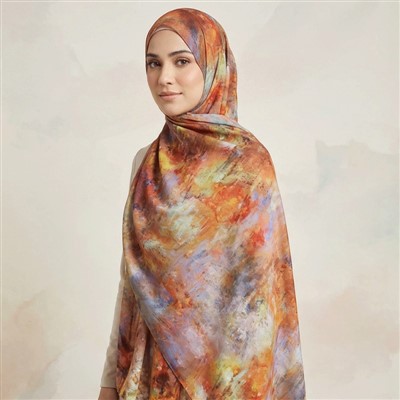
First off, let’s get one thing straight: hijab isn’t just about covering hair. If you ask any practicing Muslim woman why she wears it, most won’t start with the fabric. They’ll start with the idea of “modesty” as a core spiritual value—something that goes way beyond how you look. For Muslims, modesty isn’t just about how you dress; it’s about how you carry yourself, how you speak, how you show up for other people. Wearing hijab is a physical reminder of that commitment. Like, when I help a customer pick a silk chiffon hijab for a wedding, or a stretch jersey one for a busy workday, it’s not just about the material. It’s about that tiny, daily choice to honor a part of her faith in a world that’s always telling you to prioritize attention over intention.
Wait, but let’s not forget it’s also tied to honoring one’s self and one’s relationship with God. A lot of people outside think hijab is forced, but from what I’ve seen with my customers—teenagers picking out their first hijab, working moms choosing colors that match their scrubs, women who’ve worn it for 40 years—this is a choice. It’s a personal covenant, right? When a woman decides to wear hijab, it’s her way of saying, “I’m devoting this part of myself to something bigger than my own wants.” No one makes that choice unless they feel that pull in their heart. And as a supplier, that’s why I don’t just sell fabric— I make sure every hijab feels soft, easy to wear, and something the customer actually wants to wrap around herself. Because if she’s making a spiritual choice, the hijab should support that, not add stress.
Another big part of the spiritual meaning? Protection. Not from something outside, but from the noise of a world that judges women on how much skin they show, how they style their hair, how “available” they look. Wearing hijab is a way to set boundaries. It’s like putting up a shield that says, “My worth isn’t in my appearance.” I’ve had customers tell me that when they put on their hijab in the morning, they leave all the comments, the stares, the pressure to look a certain way at the door. That’s spiritual, too—finding peace in a small, daily act. For me, that hits close to home. A few years back, I had a customer who was starting a new job. She told me she was nervous about standing out, but when she wore our cotton blend hijab, she felt confident. It wasn’t just the hijab—it was that it helped her focus on her work, not on how people were looking at her. That’s the protection part I love seeing.
And let’s talk about community. Wearing hijab connects you to something bigger than yourself, too. When you see another woman in a hijab, there’s a silent bond. It’s not just “oh, same headscarf”—it’s “we share this commitment, even if our lives are totally different.” As a supplier, I’ve seen that firsthand. At trade shows, customers will strike up conversations about their favorite hijab styles, their go-to materials, why they chose the color they did. It’s a space where we’re all there because we care about this piece of our faith, and that builds real community. I even started a little group chat a couple years back for my regular customers—they swap tips for wearing hijab in different weather, style ideas for formal events, and sometimes just vent about a bad day. That’s the spiritual side of it, too: the way a simple piece of fabric ties people together.
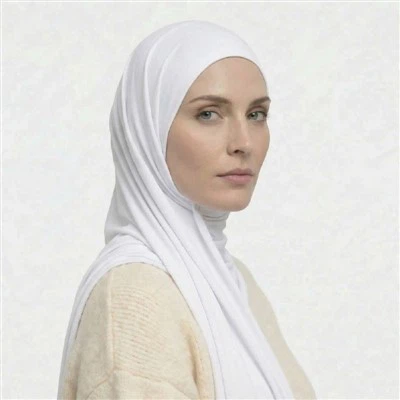
Wait, but I should mention that the spiritual meaning isn’t the same for every woman. Some wear it from a young age because their parents taught them it’s a way to honor God. Some convert to Islam as adults and choose hijab later, after years of learning and growing into their faith. Some wear it as a symbol of identity, even if their spiritual practice is more personal. That’s the beautiful part—hijab is what you make of it, spiritually. As a supplier, I make sure we have options for all of that. We have plain, neutral hijabs for someone who wants a quiet, understated piece. We have bold prints and bright colors for someone who wants to express their faith and their style at the same time. We have lightweight ones for hot summers and thick, warm ones for cold winters. Because whatever your spiritual relationship with hijab is, your hijab should work for you, not against you.
I’ve also seen a lot of misinformation online, especially lately. People will say things like “hijab is oppressing women” and that’s just not what I’ve experienced. The women who come to my shop are some of the most independent, confident people I know. They run businesses, raise kids, volunteer in their communities, and their hijab is a tool that helps them do all that. It’s not a cage—it’s a way to free themselves from the pressure to be objectified. That’s the spiritual core, right? Choosing to prioritize your inner worth over external validation.
And let’s circle back to the small, daily rituals. Every morning, when a woman puts on her hijab, that’s a moment of intention. It’s a chance to reset, to remember what matters. I once had a customer who told me that after her mom passed away, she started wearing a specific linen hijab—her mom’s favorite color. Every time she wraps it around her head, she feels like her mom is with her, and it’s a reminder to live up to the values her mom taught her. That’s the spiritual meaning in action: a piece of fabric that carries love, memory, and purpose.
As someone who’s built this business around providing hijabs that women actually want to wear, not just what’s trendy, I get that people might be curious about this. Maybe you’re a Muslim woman looking for a hijab that fits your spiritual needs. Maybe you’re a boutique owner who wants to stock high-quality, respectful hijabs for your customers. Either way, if you want to talk more—about styles, materials, what works for spiritual practice, anything—reach out to me. I’m here to help.
Modal Hijab References:
- Wadud, A. (1999). Qur’an and Woman’s Voice: Reading the Sacred Text from a Woman’s Perspective. Oxford University Press.
- Ali, K. (2000). Al-Qur’an: A Translation. Princeton University Press.
- Deeb, L. (2006). An Enchanted Modern: Gender and Public Piety in Shi‘i Lebanon. Princeton University Press.
- Rippin, A. (Ed.). (2001). The Blackwell Companion to the Qur’an. Blackwell Publishing.
- Mahmood, S. (2005). Politics of Piety: The Islamic Revival and the Feminist Subject. Princeton University Press.
Yiwu Wennuan Clothing Co., Ltd.
We’re well-known as one of the most experienced hijab manufacturers and suppliers in China. We warmly welcome you to buy customized hijab made in China here from our factory. If you have any enquiry about cooperation, please feel free to email us.
Address: 2nd Floor, Building B, No.17 Jinhui Road, Heyetang Industrial Zone, Futian Street, Jinhua, Zhejiang, China
E-mail: wennuan@wennuanfactory.com
WebSite: https://www.wennuanhijab.com/
