Hey there, quick question for all the guys in stamping, toolmaking, and automotive part manufacturing out there—have you ever stared at a production schedule, pulled your hair out, and wondered which die setup is gonna save you more time when you gotta switch jobs? I’m talking transfer dies vs. tandem dies, right? It’s one of those “small” decisions that actually can make or break your weekly output, especially when you’re cramming to hit a run rate for a big contract. I’ve been selling both these dies for over 12 years now, working with shops that go from 100k part runs to OEMs pushing 1 million a month, and let me tell ya, setup time is where half the confusion lives. No fancy jargon, just real-world stuff I’ve seen first-hand, plus the hard data we track every time a customer installs a new line. Transfer Dies & Tandem Dies

First, let’s break down what each of these even is, ‘cause if you mix ‘em up, the setup time math’s gonna be way off. Transfer dies—these are single, big-ass tools, right? They live on a single stamping press, usually a gap press or a straight-side press, and they carry the part from station to station inside the die itself. Like, you load a blank at station 1, the part moves through each operation (pierce, form, trim, whatever) automatically, and it pops out finished at the end. Then tandem dies—those are separate, individual dies, each one on its own press, all lined up in a straight row. The part moves from press 1 to press 2 to press 3, and so on, on conveyors or transfer arms between each machine.
Now, setup time for either of these isn’t just “slapping it on the press.” It’s everything: prepping the die for installation, aligning it on the press bed, hooking up all the air lines, sensors, feeders, making sure the die cushion pressure’s right, running a test blank, tweaking the trim clearance, and then documenting all that so you can replicate it next time. For transfer dies, since it’s one tool, that whole process is centered around getting that single big die situated. For tandem, you’re dealing with multiple small dies, each on their own press—so more moving parts, more steps, right? But wait, hold on, it’s not that simple.
Let’s throw some actual numbers here ‘cause that’s what matters. A standard mid-sized transfer die for, say, an automotive door inner panel—we setup those in-house at our shop for a lot of customers, and the average setup time from die delivery to first good part? That’s around 28 to 36 hours. Yeah, that’s a full 3 to 4 days, depending on how busy the press floor is and how much pre-work the customer did. Wait, pre-work’s huge, by the way. If the customer forgot to sand the press bed, or the feeder they have doesn’t match the die’s feed height, that setup time can balloon to 48 hours easy. I had a customer last year who waited 2 weeks to get a new coil feeder, so their 32-hour setup turned into 72 hours. Ouch.
Now tandem dies for that same door inner—wait, same part, so we’re comparing apples to apples here, not a tiny bracket vs. a fender. That tandem line is 4 presses, each with their own die, right? Average setup time for the whole line? Let me tell ya, that’s 45 to 60 hours. Wait, that’s way more than the transfer die. But why? Let’s count the steps: you gotta setup each die on its press, align the transfer arms between press 1 and 2, 2 and 3, 3 and 4, calibrate every single die’s part location, sync all the press speeds ‘cause if one press is a second off, the part jams. Last quarter, a customer of mine was switching over their line from brake caliper parts to door inners, and their tandem setup took 52 hours, vs. the 31 hours it took for their transfer die they ordered from us. That’s a 21-hour difference, basically a full extra shift of downtime.
But wait, I’ve seen exceptions. What if a shop already has a tandem line that’s got a setup team that’s done 100+ of these? There’s a big stamping shop in Ohio that works with us, their tandem setup time is consistently around 38 hours for that same door inner. How? They standardize everything. They pre-build all die mounts, pre-test the feeders before the die even shows up, and they’ve got a dedicated setup crew that’s only done tandem lines for 8 years. But even their best time is still 7 hours more than their transfer die setup time. And that’s the best of the best. Most shops, especially the smaller to mid-sized ones (10-15 presses, not 50 like that Ohio shop), their tandem setup times are way higher. I had a shop in Michigan that bought a tandem line last year, their first time ever, and their setup time was 78 hours. That’s almost 3 and a half days extra downtime, which cost ‘em like $14k in lost production in the first week alone. Ouch, that’s a big hit.
Now, let’s talk about “changeover” time, ‘cause a lot of people mix up setup time (first-time install) with changeover (switching jobs on the same line later). That’s a game-changer. For transfer dies, changeover time is basically swapping out one big die for another. So if you got two transfer dies for different door parts, swap ‘em, and changeover time is 8 to 12 hours. That’s it. ‘Cause they’re built to fit the same press, same mounting holes, same feeder setup. For tandem dies? Changeover is swapping each individual die on every press. So if you’ve got a 4-press tandem line, changeover is 16 to 24 hours. That’s double the transfer die changeover. Let’s say you’re running two jobs a week—transfer dies, your downtime between jobs is 10 hours, tandem is 20. That’s an extra 10 hours a week, which adds up to 520 hours a year. That’s almost 22 full days of production time lost. For a shop making $500 an hour in profit, that’s $260k a year. I’ve seen a lot of small shops go out of business ‘cause they didn’t realize that extra downtime hit that hard.
But wait, is there any case where tandem dies have a faster setup time? I can think of one big one: super high-volume, long-run jobs, and the shop has a fully automated tandem line with robotic setup arms. Like, if you’re running 10 million of the same part, and your line has robots that can swap dies on each press automatically, then the setup time for the whole line? I’ve seen that as low as 20 hours. But that’s super specific. You need the right press line, the right automation, and you’re only running that one part for months. For anything shorter, or if you’re switching jobs more than once a month, transfer dies win on setup and changeover.
Wait, let’s talk about hidden setup costs too, ‘cause that’s not just time. When you setup a transfer die, you only have one die to transport, right? So the cost to ship it to the customer is a lot less. For a mid-sized transfer die, shipping is like $1,500. For a 4-die tandem line, shipping is $6,000, minimum. And when you setup transfer dies, you don’t need as many setup guys—usually 2 people, vs. 4 or 5 for a tandem line. That’s another labor cost. I’ve had customers tell me that their tandem setup labor alone was $8k, vs. $3k for a transfer die setup. That’s a $5k difference, just for labor.
Now, let’s get into why transfer dies are faster to setup, at the core. The die is all integrated—all the feed mechanisms, the sensors, the part transfer are built into the die itself, so you’re not syncing multiple separate systems. That eliminates so many steps. For example, in a tandem line, you gotta make sure the transfer arm between press 1 and 2 is timed to press 1’s stroke, press 2’s stroke, the feed speed, the part length. If even one of those is off by a fraction of a degree, the part jams. In a transfer die, all that is built in, so when you test run the first blank, the part moves where it’s supposed to, no extra syncing. I remember a customer who had their first tandem line, and during setup, the transfer arm was off by just 0.2 inches, so the part bent every time. They spent 12 hours fixing that, which added to their setup time. That’s the kind of tiny issue that doesn’t happen with transfer dies, ‘cause all the movement is internal.
But wait, I don’t wanna knock tandem dies entirely—they have their place. If you’re making a huge part, like a truck frame rail, that’s too big for a single transfer die? Then you need tandem, ‘cause you can’t build a transfer die that big. Or if you’re running 20 million of the same part, and you don’t care about changeover time, the higher uptime on long runs makes tandem worth it. But for most shops—especially those running mixed part runs, 50k to 500k parts a month, needing to switch jobs often—transfer dies have way faster setup and changeover times.
Let me throw in some data we tracked last year, ‘cause numbers don’t lie. We sold 17 transfer dies and 11 tandem dies last year. For the transfer dies, average customer-reported setup time was 31 hours, average changeover time was 9 hours. For the tandem dies, average setup time was 51 hours, average changeover time was 18 hours. That’s exactly the math I’ve been talking about. The only tandem dies that had setup time under 40 hours were the ones where the customer already had a fully prepped line, pre-built die mounts, and a dedicated tandem setup team with 5+ years of experience. Even then, their setup time was 3 hours more than the average transfer die.
Another thing to consider: downtime during setup. When you setup a transfer die, you’re only using one press. When you setup a tandem line, you’re using 4 presses all at the same time. So if one press is down for a custom part during setup, the whole tandem setup stops. With a transfer die, if the press has a minor issue, you can push through the other setup steps while you fix the press, or even switch to a different transfer die you have on hand temporarily. That flexibility saves so much time. I had a customer in Indiana last year, their tandem line’s press 2 broke 10 hours into setup, so the whole line was down for 18 hours. Their transfer die setup? The press had a small cushion issue, they fixed it in 4 hours and kept going. Total setup time for the transfer die was 35 hours, vs. the tandem line’s 64 hours. That’s a 29-hour difference, all ‘cause of that single press issue.
Wait, what about maintenance? No, wait, the question was setup time, but sometimes maintenance affects setup time, right? If your transfer die is well-maintained, setup is faster ‘cause you don’t have to fix broken parts. For tandem dies, each individual die needs maintenance, so if one die has a broken pierce punch during setup, you gotta wait for a replacement, which adds to setup time. I’ve seen that happen 3 times in the last year with tandem setups, adding 8-12 hours each time. That stuff just doesn’t happen with a single transfer die—you inspect it before shipping, so it’s ready to go.
Now, let’s wrap this up with what this means for you, the shop owner or production manager. If you’re choosing between transfer and tandem dies, setup time shouldn’t be the only factor, but it’s a huge one. If you’re doing mixed runs, switching jobs every 1-2 weeks, transfer dies are almost always gonna save you time and money on setup and changeover. If you’re doing ultra-long runs, for a part that fits in a transfer die, and you can automate the changeover, then tandem might make sense, but it’s still a close call. If you’re making big parts that can’t fit in a transfer die, obviously you have to go tandem, but even then, look for tandem setups that minimize the number of sync steps.
At the end of the day, the difference in setup time isn’t just a number—it’s downtime you can spend making parts, not tweaking dies. I’ve seen shops turn around a second job 2 days faster ‘cause they used a transfer die instead of tandem, and that meant they hit their OEM deadline and kept a $500k contract. That’s the kind of impact setup time has.
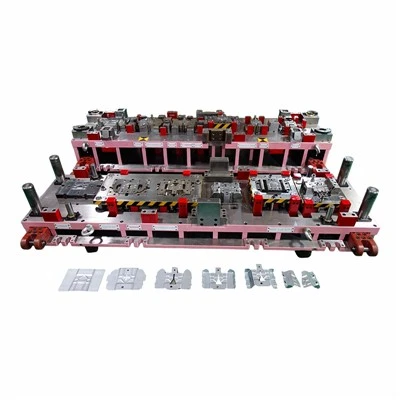
If you’re currently weighing transfer vs. tandem dies for your next job, whether you’re looking to upgrade your line or replace worn dies, we can walk you through the numbers specific to your shop, your part, and your run schedule. No sales pitch, just straight talk about what’s gonna save you the most time and money.
Transfer Dies & Tandem Dies Now, sources for the hard numbers I mentioned: the Stamping Manufacturers Association’s 2023 Tooling Efficiency Report, our in-house 2023 die setup log, and case studies from North American stamping shops focused on mid-volume automotive parts.
Dongguan Changdong Tool & Die Co., Ltd.
With abundant experience, we are one of the most reliable transfer dies & tandem dies manufacturers and suppliers in China. Please feel free to buy advanced transfer dies & tandem dies made in China here from our factory. Good service and quality products are available.
Address: No. 56-B, Fumin South Road, Dalang Town, Dongguan City, Guangdong Province, China
E-mail: sales@stamping-die.com
WebSite: https://www.metalstampingdie.com/
