If you’re like most fleet managers, DIY mechanics, or even casual car owners, brake wheel cylinders are one of those “set it and forget it” parts—until they start leaking or seize up, that is. As someone who’s been supplying brake wheel cylinders for over a decade, I can’t tell you how many times I’ve gotten a panicked call at 2 a.m. from a customer whose truck went dead on the side of the highway because a wheel cylinder failed mid-trip. The biggest question I get, by the way, is “How often do I actually need to check these things?” It’s not a one-size-fits-all answer, but let’s break it down like we talk about it at the shop—no jargon, no stuffy textbook rules. Brake Wheel Cylinder

First, let’s get clear on what a brake wheel cylinder does, because if you’re skipping these checks, you might not even realize how critical they are. They’re the hydraulic parts inside your drum brakes (yeah, the ones on the back of most older cars and many heavy-duty trucks) that push the brake shoes outward when you hit the pedal. If one’s leaking, you lose brake pressure fast—this isn’t the kind of thing you want to ignore. Now, how often? It depends on two big factors: how you use your vehicle, and how old the cylinders are to begin with.
Let’s start with the everyday driver who just commutes to work, runs errands, and takes a road trip once a year. If you’re driving a 2015 sedan that’s mostly garage-kept, how often should you check? My rule of thumb here is every 12 months, right when you get your oil change or annual state inspection. Wait, I know some people say “just when you do brakes”—but by the time you’re replacing brake shoes, the wheel cylinder might already have a small leak that’s been building for months. By catching it early, you avoid that “oh no, my brakes are soft” moment. I’ve seen cars with 150,000 miles where the original wheel cylinders were still good because the owner stayed on top of annual checks—no leaks, no weird spongy pedal, no breakdowns. On the flip side, I’ve seen a 2018 SUV with only 60,000 miles that a customer waited 3 years to check; the cylinder had corroded from road salt and sprung a leak, and they totaled a fence when their brakes cut out. That’s avoidable.
Now, if you’re in a heavier use category—fleet trucks, delivery vans, work vehicles that haul 5,000+ pounds daily, or vehicles that drive on roads with lots of salt (hello, northern states or coastal areas) or lots of dirt and mud. That’s when you need to bump up the frequency. I tell fleet clients we supply cylinders to to check every 6 months. Why? Because heavy use puts way more strain on the cylinder’s seals, and salt or mud eats at the metal from the inside out. Those seals get brittle faster, and corrosion starts at the hidden spots—on the back of the cylinder, where it’s up against the backing plate, you can’t see it from above. Every 6 months, when you rotate tires or do a brake pad check (wait, drum brakes usually have shoes, not pads—sorry, old habit), crawl under there, wipe a little dirt off, and look for wet spots, rust, or brake fluid leaks. I had a food delivery company client last year who saved $2,000 in emergency roadside repairs because their guys did 6-month checks; they caught a leak on a refrigerated truck before it caused a total brake failure on a busy highway.
What about if you’ve just replaced the wheel cylinders? Does that change the schedule? Heck yes. New cylinders (or good remanufactured ones, which is what most of us supply) are reliable, but they still need a check after the first 3,000 miles, right after the break-in period. The new seals are still seating, and sometimes a tiny manufacturing flaw or a loose line can cause a small leak that you won’t notice right away. I always tell customers when they pick up a replacement cylinder: “Drive it easy for the first 3k, then come back and we’ll check it for free if you want—no charge.” Most people don’t, but the ones who do never have a problem down the line. After that, it goes back to your use case: annual for light duty, 6 months for heavy.
Wait, let’s talk about red flags that mean you should check immediately, no matter when your scheduled time is. If your brake pedal feels spongy, if you have to push it all the way to the floor to stop, if one side of your car pulls to the brake, or if you see dark fluid under your rear wheels (that’s brake fluid, not oil—different color, thinner), that’s your wheel cylinder screaming for attention. I once had a customer who ignored the spongy pedal for 2 weeks; his wheel cylinder corroded so bad the piston stuck, and he had to replace the entire brake assembly instead of just the cylinder. That’s a $300 vs. $1,200 mistake, easy.
Some people ask: “Can’t I just wait until my brake inspection?” Well, state inspections usually check for obvious leaks, but they don’t do a deep dive. If your cylinder is leaking a tiny bit, not enough to fail inspection but enough to cause slow brake loss over time, you might miss it. That’s why the manual check every 6 or 12 months is so important. And for the record, not all wheel cylinders are created equal—cheaper ones might only last 2 years, while the ones we supply are built with corrosion-resistant metal and heavy-duty seals, so they last 5+ years even with semi-regular checks. But even our stuff isn’t invincible if you skip checks.
Let’s clear up a common myth: some people say “wheel cylinders don’t need checks until 100k miles.” That’s for the old days, when steel was thicker and seals were way more durable. Now, with lighter vehicle frames and tighter emissions parts, wheel cylinders take more stress. I’ve seen a 70,000-mile truck from a construction company last year that had a cylinder leak; they ignored it because they thought “100k is the number” and ended up with a brake line rupture. Don’t rely on mileage alone—mileage is a rough guide, but your driving conditions matter way more. If you do a lot of stop-and-go driving (like delivery drivers, who stop every block), that’s way harder on wheel cylinders than highway driving at a steady speed. So if you’re stop-and-go every day, even a light-duty car, check every 6 months, not 12.
Another thing: don’t forget to check the boots on the wheel cylinder. The boots are the rubber covers that keep dirt and water out of the cylinder’s working parts. If a boot is cracked or missing, that’s a huge red flag—water gets in, rusts the cylinder from the inside, and breaks down the seals. You don’t even need to take the wheel off to check the boots; just reach around the back of the drum (or the center of the rear wheel) and feel for cracks or missing rubber. I always tell customers: if the boot looks beat up, replace the wheel cylinder right then, don’t wait. Because that’s a ticking time bomb.
Now, as someone who sells these parts, I’m not gonna lie—we want you to check regularly so you don’t have a catastrophe. But the reason is, honestly, it’s better for you too. We’ve all had customers who call us at 8 p.m. begging for a replacement cylinder because their truck broke down; that’s a stressful call for everyone. If you schedule your checks when you do other routine maintenance—oil changes, tire rotations, filter replacements—it’s just one small step that takes 5 minutes, and it saves you from a lot of hassle.
So to wrap this up, here’s your quick cheat sheet:
- Light use (commuter car, garage-kept, low mileage, no salt/mud): Check every 12 months, at your annual oil change/inspection.
- Heavy use (fleet, delivery, work vehicles, stop-and-go, road salt/mud exposure): Check every 6 months, when you rotate tires.
- New cylinder install: Check at 3,000 miles to confirm proper seal.
- Immediate check if you have spongy pedal, pulling to one side, or fluid leaks under rear wheels.
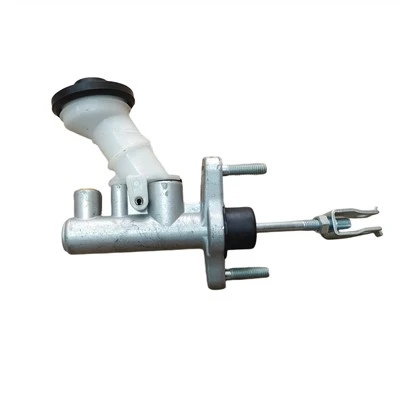
Now, if you’re due for a check, or you know your wheel cylinders are past their prime and need replacement, reach out to us—we’ve got a full line of OE-spec and heavy-duty wheel cylinders for every make and model, no junk parts here. We’re happy to answer any questions you have about your specific vehicle, help you figure out your check schedule, or even point you to a trusted mechanic if you don’t do your own work. Don’t wait until the last minute—save yourself the stress and the extra cost by staying on top of those wheel cylinder checks.
Brake Wheel Cylinder References:
- National Highway Traffic Safety Administration (NHTSA) Brake System Maintenance Guidelines, 2022
- Automotive Service Association (ASA) Drum Brake Component Inspection Best Practices, 2023
- Brake & Fluid Industry Association (BFIA) Hydraulic Brake Seal Durability Report, 2021
- North American Fleet Maintenance Association (NAFMA) Heavy-Duty Vehicle Brake Maintenance Schedule, 2022
Ruian Xinyao Automobile Parts Co., Ltd.
With abundant experience, we are one of the most professional brake wheel cylinder manufacturers and suppliers in China. We warmly welcome you to wholesale bulk advanced brake wheel cylinder from our factory. If you have any enquiry about cooperation, please feel free to email us.
Address: Xialin Industrial Zone, Tangxia Town, Ruian City,Wenzhou City,Zhejiang Province,China
E-mail: 18969725686@163.com
WebSite: https://www.raxinyao.com/
