Hey there! I’m someone working for a smart manufacturing supplier, and I’ve seen firsthand how incredible smart manufacturing can be. One big deal in the factory world is the utilization rate of factory space. Let’s dig into how smart manufacturing can really boost that. スマート製造

First off, what’s the big deal with factory space utilization? Well, factories cost a ton to build and maintain. Every square foot that’s not being used effectively is like money going down the drain. And in today’s competitive market, companies can’t afford that. That’s where smart manufacturing comes in.
One of the key ways smart manufacturing helps is through automation. Autonomous Guided Vehicles (AGVs) and robotic arms are super cool. These AGVs can zip around the factory, moving materials from one place to another without getting tired or making mistakes. They don’t need wide, open aisles like human – operated forklifts. With AGVs, we can design narrower aisles, which means we can stack more shelves and store more stuff in the same amount of floor space.
Robotic arms are also amazing. They can be programmed to pick and place items with extreme precision. In a traditional factory, workers need a certain amount of space to move around and do their jobs. But robots can work in much tighter quarters. They can be installed close to each other and to storage racks, making better use of the vertical and horizontal space in the factory.
Another aspect is the use of real – time data. In smart manufacturing, we have sensors everywhere. These sensors can tell us exactly how much space is being used in different parts of the factory at any given time. For example, if there’s a storage area that’s always half – empty, we can use that data to re – arrange the storage layout. Maybe we can move some of the less – used items to a smaller area and free up space for more important or frequently accessed goods.
We can also use this real – time data to optimize production lines. By analyzing how long each step in the production process takes and how much space each machine needs, we can re – configure the production line. Sometimes, just by moving a few machines around or changing the order of operations, we can make a big difference in the amount of space the production line takes up.
3D printing is another game – changer. In traditional manufacturing, you often need large warehouses to store raw materials and finished products. But with 3D printing, you can produce parts on – demand. You don’t need to stockpile a huge inventory of parts. This reduces the need for large storage areas. And since 3D printers can be relatively compact, they don’t take up as much floor space as traditional manufacturing equipment.
Let’s talk about modular manufacturing. In a smart manufacturing setup, we can use modular equipment. This means that the machines can be easily assembled, disassembled, and re – arranged. If you need to change the production process or increase the production of a certain product, you can quickly re – configure the factory layout. For example, if you usually produce small items but suddenly get a big order for a larger product, you can re – arrange the modular equipment to create more space for the new production requirements.
Now, I want to share a real – life example. I was working with a factory that was struggling with space utilization. They had a lot of old – fashioned equipment and a disorganized layout. We introduced AGVs and real – time monitoring sensors. The AGVs allowed us to reduce the aisle width, which instantly freed up a significant amount of floor space. The sensors helped us identify areas where there was too much or too little space being used. We re – arranged the storage racks and re – configured the production line. As a result, they were able to increase their overall production capacity by 20% without having to expand their factory space.
The benefits of improving factory space utilization through smart manufacturing are huge. Not only does it save costs on rent, building maintenance, and utilities, but it also makes the factory more efficient. With better space utilization, products can move through the factory faster, reducing lead times. And that means happier customers and more business.
If you’re a factory owner or a procurement manager and you’re facing challenges with factory space utilization, I highly recommend considering smart manufacturing solutions. At our company, we’ve got a wide range of smart manufacturing products and services. We can customize a solution just for your factory, based on your specific needs and production processes. Whether it’s AGVs, robotic arms, 3D printers, or real – time monitoring systems, we’ve got you covered.
I know it might seem like a big step to switch to smart manufacturing, but trust me, it’s worth it. Our team of experts is here to guide you through the whole process, from planning to installation and training. We’ll make sure that the transition is as smooth as possible and that you start seeing the benefits of improved space utilization right away.
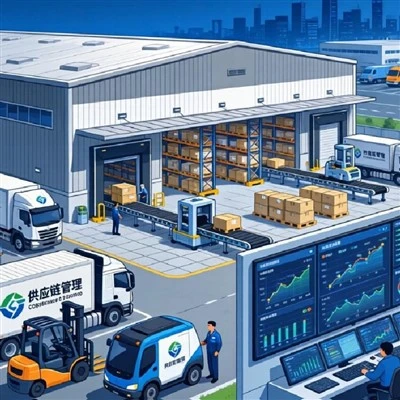
So, if you’re interested in learning more about how smart manufacturing can improve your factory’s space utilization, don’t hesitate to reach out. We’re happy to have a chat, answer your questions, and provide you with a free consultation. Let’s work together to make your factory more efficient and profitable.
security References
- "Smart Manufacturing: The Future of Production" by Industry Week
- "Automation in Factory Space Optimization" from Manufacturing Today magazine
- "3D Printing and Its Impact on Factory Layouts" by the Journal of Advanced Manufacturing Technologies
SCSK Shanghai, the China base of SCSK Co., Ltd., is one of the most experienced smart manufacturing service providers and suppliers in China and Japan, featuring advanced services and good prices.If you want to know more about discounted smart manufacturing services, please feel free to contact us for price list and quotation.Customized orders are also welcome.
Address:
E-mail:
WebSite: https://www.scskcn.com/
