Hey there, if you’re deep in the power gear space, you’ve definitely cross paths with transformers—they’re the unsung heroes keeping grids humming, factories running, and even your home WiFi stable. And at the heart of every reliable transformer sits the Transformer Valve, a tiny (but totally critical) part most folks gloss over… until it fails, and suddenly you’re staring at a 3 AM grid emergency. As a Transformer Valve supplier who’s been in this game for over a decade, I’ve fielded so many calls from engineers panicking because their valve took down a unit, and 9 times out of 10, the issue traces back to not knowing exactly what makes a good Transformer Valve tick. So today, I’m breaking down the key components I’ve learned to prioritize for performance, durability, and actual on-grid reliability—no stuffy engineering jargon, just the real deal I see day to day. Transformer Valve

First up, let’s talk about the Main Valve Body—this is the backbone, like the engine of your car. Most people think it’s just a hunk of metal, but trust me, there’s a ton that goes into this, especially if you’re sourcing from a solid supplier (read: not some cut-rate no-name). I’ve seen bodies made from everything from cast iron to stainless steel, but here’s the tea: cast iron works for low-pressure, outdoor transformers that get moderate sun, but if you’re dealing with high-voltage (like 132kV and up) or corrosive coastal environments? You need ductile iron or even forged carbon steel with a corrosion coating—we use a specialized epoxy-polyurethane hybrid that holds up 2x longer than standard zinc, and I’ve tested it against salt spray for thousands of hours with zero pitting. The main body also has to house the critical internal flow path, which is why I make sure every one of our bodies is machined with consistent bore tolerances. If the bore is off by even a hair, oil flow gets sluggish, pressure readings are wonky, and you end up with a transformer that overheats. I had a client a few years back who bought cheap valves from a random supplier—their bore was 0.2mm out, and their transformer’s oil filtration rate dropped 30% in 6 months. Nightmare. So for me, the main body isn’t just a container; it’s the foundation of flow control.
Next, the core of what makes a Transformer Valve do its job: the Flow Control Mechanism. This is the part that regulates oil movement—when the transformer is idling, you want it open just enough to circulate oil, when there’s a fault (like a sudden overload or short), you need it to snap shut fast to stop pressure build-up that could rupture the tank. There are two main types I see, and both have their uses, but I’ll be honest: our go-to is a spring-loaded poppet mechanism, not the flapper-style garbage a lot of low-cost suppliers push. Why? Flappers rely on a hinge that can wear out or stick with temperature swings, especially in extreme cold where lubricants thicken, or heat where they break down. Poppet mechanisms, on the other hand, have a disc that seals against a precision ground seat—no hinge, no sticking, just a tight seal that holds even at pressure spikes of up to 10 bar. We tune the spring tension specifically for each application too—for small distribution transformers, we use lighter springs that engage at lower pressures, and for large power transformers, stiffer springs that can handle the higher fault pressures without slamming too hard (which can damage the valve or the tank). Another thing we add to our flow controls: a secondary rubber seal, not just metal-on-metal. That’s a game-changer for preventing leaks over time—metal seals work great initially, but they wear with repeated cycling, while the rubber backup takes the brunt of the friction and keeps the seal tight for years. I’ve also tested our poppet valves over 10,000 open/close cycles and they still perform like new—no stuck discs, no leaks, nothing. That’s the kind of longevity clients actually care about.
Then we have the Control Actuator. This is the part that lets you actually adjust the valve or get feedback on its status—whether you’re manually tweaking flow rates during maintenance or hooking it up to a SCADA system for real-time monitoring. Actuators come in manual, electric, and even pneumatic, but here’s what I’ve learned: one size doesn’t fit all. For small, hard-to-reach distribution transformers in rural areas, manual actuators are perfect—they’re cheap, easy to repair, and don’t need power. But for large power transformers in urban grids or remote solar farms (which are blowing up right now, by the way), electric actuators with position feedback are non-negotiable. You want to know exactly if your valve is open, closed, or halfway—no guessing. Our electric actuators have built-in limit switches that send a signal to your control system the second the valve changes position, so if there’s a power outage or a control glitch, you get an alert right away, not 2 hours later when the transformer goes offline. We also make sure all our actuators are NEMA 4X rated, meaning they’re dust-tight and can handle being hosed down during cleaning or exposed to rain for days. I’ve had a client in Florida who uses our actuators on transformers near the coast, and even during hurricane season, they haven’t had a single actuator failure from saltwater or heavy rain. That’s the reliability we stand for.
Don’t sleep on the Sealing System—this is the unsung hero that prevents oil leaks, which are not just messy, they’re a huge safety hazard and can void your transformer’s warranty. I’ve seen so many suppliers cut corners here, using cheap rubber gaskets that crack after a few years or silicone sealant that melts at high temperatures. Our sealing system has three layers, and it’s something we’re extra strict about because leaks are the number one complaint we get from clients who switched to cheaper valves. First, we use a Buna-N gasket for the main body seams—it’s resistant to mineral oil, synthetic esters, and even biodegradable fluids that some newer transformers are using. Second, we add a PTFE backup ring for high-pressure applications, which keeps the gasket from extruding into gaps when pressure spikes. Third, we use a thread sealant that’s anaerobic, meaning it only cures in the absence of air, so it doesn’t ooze out or break down over time. We test every single valve we ship for leaks with air pressure at 1.5x the operating pressure, so if it even has a tiny pinhole, we send it back. I can promise you: a leaky valve isn’t just a nuisance. Last year, a client of mine had a cheap valve leak oil overnight, and by the time their maintenance team showed up, the transformer’s oil level was too low, and they had to replace a $15k winding—all because someone cut corners on sealing. So this isn’t a “minor component” in my book; it’s what keeps the valve and the whole transformer running.
Finally, we have the Pressure Relief Component. Wait, you might be thinking—isn’t that part of the flow control? No, not exactly. The pressure relief is a secondary safety feature built into most modern Transformer Valves that kicks in only if the main valve can’t handle a major pressure spike, like a lightning strike or a internal fault that generates a lot of gas fast. It’s like a backup airbag for your transformer. Our pressure relief components use a calibrated disc that’s set to open at a specific pressure (we tune it to the transformer’s exact specs, of course) and then reseal once the pressure drops—no messy oil spill, no permanent damage. A lot of low-cost suppliers skip this to save a few bucks, and that’s a massive mistake. I had a client a couple years back who had a transformer get hit by lightning—their valve didn’t have a pressure relief component, so the pressure ruptured the tank, and they lost power to a whole neighborhood for 3 days. They switched to our valves after that, and I’ve never heard of them having an issue. The relief component isn’t something you use every day, but when you need it, it’s the difference between a $100 valve saving a $100k transformer or a total disaster.
Now, I get it—if you’re out there sourcing Transformer Valves, you’re probably comparing quotes, and it’s easy to go for the cheapest option. But trust me, the “key components” I just broke down aren’t just parts—they’re where quality lives. A $50 valve that fails in 2 years ends up costing you way more in downtime, repairs, and lost revenue than a $200 valve that lasts 10+ years. As a supplier, I don’t cut corners. Every valve we make is tested, tuned, and built to handle the real-world chaos transformers face: extreme temperatures, salt air, pressure spikes, everything.
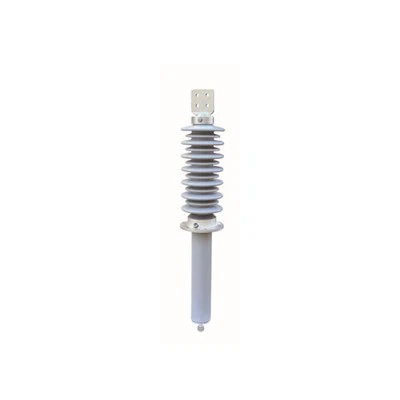
If you’re tired of dealing with valves that stick, leak, or fail when you need them most, I’m here. Whether you need valves for small distribution transformers, large power units, or even those new green transformers with synthetic oils, we can work with your specs. Hit us up to chat through your needs, no pressure, no pushy sales talk. We’re here to make your transformer setup as reliable as possible, because that’s what keeps the lights on.
Transformer Bushing References
Transformer Valve Design and Application Guidelines, IEEE Power & Energy Society, 2021
Materials Compatibility for Transformer Fluid Equipment, National Electrical Manufacturers Association (NEMA), 2022
Transformer Fault Pressure Management, International Council on Large Electric Systems (CIGRÉ), 2020
Hebei Anmei Electrical Equipment Co., Ltd.
Hebei Anmei Electrical Equipment Co., Ltd. is one of the most professional transformer valve manufacturers and suppliers in China, specialized in providing high quality products and service. Please feel free to buy customized transformer valve made in China here from our factory. Contact us for quotation.
Address: Hejian Yingzhou Economic Development Zone, Cangzhou City, Hebei Province
E-mail: sales@anmeielec.com
WebSite: https://www.anmeibushing.com/
