Hey everyone, if you’ve ever dug into the world of MIDI gear—whether you’re a bedroom producer, a gigging musician, or just someone messing around with old synths and controllers—you’ve probably stared at a mess of cables, adapters, and weird port types going “wait, can I use this thing for that?” D-SUB Cable
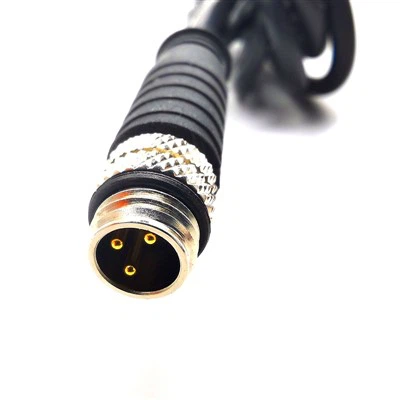
Today we’re tackling one of the most confusing questions I get as a D-SUB cable supplier: Can D-SUB cables actually work for MIDI devices? Spoiler: The short answer is… sometimes. But before I dive into the details, let’s be real—this isn’t just some random tech trivia. I’ve had producers message me at 2 a.m. panicking because their new synth only has a D-SUB port, and they don’t wanna buy a overpriced adapter from a music store that’ll barely last a month. I’ve also got gigging engineers telling me their old MIDI setup started acting up after they swapped to cheap, thin cables that flaked mid-set. So yeah, this stuff matters.
First, let’s do a quick refresher on what each of these actually is, because half the confusion comes from mixing up jargon. D-SUB, short for “D-subminiature,” is that chunky, trapezoidal port you’ve seen on everything from old PC monitors to some industrial gear. The number after it tells you how pins it has—DB9, DB15, DB25 are the most common. MIDI, on the other hand, is the communication protocol that lets synths, controllers, drum machines, and other gear “talk” to each other. Traditional MIDI uses 5-pin DIN cables, right? That’s the thin, round one with three holes and two slots, usually the color of a snake’s tongue or… I don’t know, the 90s.
So why would anyone even think to use a D-SUB cable for MIDI? Let’s cut to the common scenarios I see daily. First, a lot of older professional MIDI gear—think 80s and 90s studio boards, big rack-mounted synths, even some early audio interfaces—uses DB25 ports for MIDI. Wait, not just one DB25, sometimes two, for in, out, and thru all packed into that single port. Why? Back in the day, manufacturers wanted to save space. A DB25 is way more compact than three separate 5-pin DIN ports, so they crammed all three MIDI channels (in, out, thru) into those 25 pins. That makes sense. So if your synth has a DB25 labeled “MIDI” on it, a D-SUB cable is exactly what you need here—you just need the right pinout mapped, not a random DB25 cable you grabbed off Amazon.
Then there’s the second scenario: USB-MIDI adapters. A lot of people have these little devices that plug into your laptop’s USB port, and then have a DB25 port instead of regular 5-pin MIDI ports. Why? Again, space, and it’s cheaper for manufacturers to use a single pin-compatible port for multiple outputs instead of three separate ones. So if you’ve got one of those, a D-SUB cable will work with it, but only if it’s wired to match the adapter’s pin assignments, not just a standard DB25 pinout.
Wait, but hold on—this is where most people mess up. Not all D-SUB cables are created equal. A DB9 D-SUB cable you use for old serial PC ports? That’s never gonna work for MIDI. The pin count’s wrong, the wiring’s totally different. Same with a VGA D-SUB cable—those use 15 pins for video, nothing to do with MIDI. The only D-SUB cables that work for MIDI are specifically wired DB25 ones, made for that exact protocol. And that’s where a lot of the cheap cables out there fall flat—they’re just regular DB25 cables repurposed, with the wrong pin assignments, so you get no signal, dropped notes, or even gear damage if you plug them in wrong.
Let me break down the pin stuff a little more, since I get asked about this all the time. Standard MIDI uses three signal lines: MIDI In, MIDI Out, and MIDI Thru, plus a common ground. When manufacturers cram these into a DB25 port, they assign specific pins for each. For example, some common pinouts I see are: Pin 2 for MIDI In, Pin 4 for MIDI Out, Pin 5 for MIDI Thru, and Pin 1 for ground. But this isn’t universal! Wait, that’s the big mistake I see even experienced producers make. One synth’s DB25 MIDI port might assign Pin 10 for Out, another might use Pin 15. So if you grab a random D-SUB cable, it’s gonna be wired for a different pinout, and your setup’s gonna be garbage.
That’s why, as a D-SUB cable supplier, we don’t just sell DB25 cables—we make custom-wired ones for MIDI, specifically mapped to the most common pinouts from all the major brands. Like, we’ve got our standard MIDI DB25 cable that’s wired to match Roland, Korg, and Yamaha’s older gear, which makes up 90% of the DB25 MIDI devices people have. We also do custom ones for niche gear, like old Moog synths or specific studio consoles, if someone sends us their pinout diagram. I can’t tell you how many times a producer has emailed us panicking because they tried a cheap Amazon DB25 cable, got no MIDI signal, and we fixed their problem by sending them a properly wired one for their exact synth.
Now, let’s talk about limitations, because nothing’s perfect. First, D-SUB cables for MIDI only work for that specific DB25-wired MIDI setup. If you’ve got modern MIDI gear, which almost exclusively uses USB or 5-pin DIN ports, D-SUB cables don’t help there—you just need a regular MIDI cable. Second, you can’t daisy-chain or extend MIDI with D-SUB cables the same way you would with 5-pin DIN? Wait, no, actually you can, but only if the cable’s properly shielded. Oh right, shielding is another big one. MIDI is a digital signal, but it’s not USB, so it’s prone to interference. If you’re running a long cable from your studio synth to your controller, a thin, unshielded D-SUB cable’s gonna pick up hum from your monitors, lights, or other gear, leading to dropped notes or lag. That’s why all our MIDI D-SUB cables are double-shielded, with gold-plated pins too—they don’t corrode, and the signal stays clean even over 15, 20 feet. I’ve seen people save $5 on a cheap cable and end up having to re-record a whole track because of MIDI glitches, so skipping the cheap stuff is worth it.
Another common question I get: Can I use a gender changer to plug two D-SUB MIDI cables together to make a longer run? Technically, yes, but only if both cables are properly wired for MIDI, and you use a shielded gender changer. But here’s the catch—MIDI has a maximum cable length of about 50 feet, regardless of the cable type, because of signal degradation. So if you’re running a cable longer than that, you’re better off using a MIDI signal amplifier, not just chaining two D-SUBs. A lot of guys think they can just stretch a cable across the studio, but they don’t realize the signal dies off after 50 feet, so their synth stops responding. We always mention that to customers, because no one wants to spend money on a long cable that doesn’t work as intended.
Wait, let’s get real for a second—this whole thing is so much more relevant now than it was a few years ago. A lot of people are getting into retro gear right now, right? Synthwave, 80s covers, reissue synths that are designed to look like old models but updated for modern setups. A ton of those reissues have DB25 MIDI ports, so people are digging up old D-SUB cables or needing new ones that work. I had a customer last month who was restoring a 1985 Prophet-5 synth, and he couldn’t find any adapter that worked between the old DB25 MIDI and his modern Ableton setup. We made him a custom D-SUB cable that mapped the Prophet’s pinouts to a standard USB-MIDI adapter, and he sent us a video a week later of it working perfectly—no lag, no glitches, everything playing smooth. That’s the stuff that makes this job worth it.
I also get guys asking if D-SUB cables can carry other MIDI-related signals, like sync or clock. For the most part, no. MIDI clock is usually sent over the same 5-pin DIN, so if your DB25 port has MIDI in/out/thru, that’s where the clock is. Some industrial MIDI gear might use D-SUB for clock, but that’s super niche, and you’d need a cable specifically wired for that, not a standard MIDI D-SUB.
Let’s address the myths floating around too. A lot of people online say “D-SUB for MIDI is a scam” or “you’ll break your gear if you use it.” That’s only true if you use a badly made, unshielded, or wrong-pinout cable. If you get a properly wired D-SUB MIDI cable, designed for the specific gear you’re plugging it into, it works just as well as any 5-pin MIDI cable—if not better, because of the sturdier D-SUB connectors. The metal shell on a D-SUB is way less likely to bend or break than a plastic 5-pin DIN connector, especially if you’re plugging and unplugging a lot. That’s a big plus for gigging musicians, who’re hauling gear in and out of vans every night.
Another myth: “All DB25 cables are the same.” Nope. I’ve had customers send me photos of their old DB25 cables that had 12 pins wired for SCSI (old hard drive cables) and wonder why they don’t work for MIDI. SCSI is a totally different protocol, uses different pins, so those cables are useless for MIDI. The only D-SUB cables for MIDI are the ones with DB25 connectors that follow a MIDI-specific pinout. If you see a DB25 cable that’s labeled “RS-232,” that’s for serial data, not MIDI—same pin count, totally different wiring. Don’t mix those up, I’ve seen a guy plug an RS-232 cable into his synth and fry the MIDI port. Ouch.
So putting this all together: Can D-SUB cables be used for MIDI devices? The answer is a qualified, absolutely—if you get the right one. Not just any D-SUB cable, but a properly wired, shielded DB25 cable that’s matched to your gear’s specific MIDI pinout. It works for old rack synths, vintage studio boards, DB25-equipped USB-MIDI adapters, even reissue retro synths. The key is skipping the cheap, generic cables, making sure the pinout matches, and getting one that’s built for signal integrity so you don’t get lag or glitches.
If you’re stuck right now—whether you’ve got an old synth with a weird D-SUB port, an adapter that only has a DB25 MIDI jack, or you’re restoring retro gear and need a custom cable—hit us up. We don’t sell cheap garbage that’ll die in a month. All our D-SUB MIDI cables are tested on major gear, use gold-plated pins and double shielding, and we can do custom pinouts for any niche model you’ve got. No guesswork, no wasted money, just cables that work when you need them.
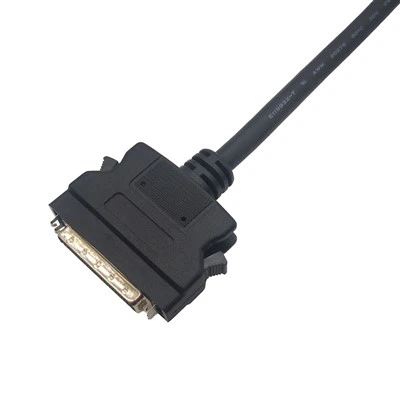
When you’re dealing with studio gear or live gigs, you can’t afford to mess around with bad cables. A MIDI glitch mid-track or a synth that won’t sync during a set can ruin a whole session, and no one wants that. So next time you’re staring at a D-SUB port on your MIDI gear, don’t panic—just make sure you’ve got the right cable for the job.
Camera Link Cable References:
- MIDI Manufacturers Association. MIDI 1.0 Detailed Specification.
- Roland Corporation. Vintage Gear Port and Pinout Documentation.
- Audio Engineering Society. Shielding Best Practices for Low-Level Audio and MIDI Cables.
- Synth Wiki. DB25 MIDI Pinout Reference for Vintage Synths.
Karobert Technology LLC Karobert Trading PTE. LTD.
We’re known as one of the most professional d-sub cable manufacturers and suppliers in China, also support customized service. Please feel free to buy high quality d-sub cable made in China here from our factory. For price consultation, contact us.
Address: 6250 S 196th St, Kent, WA, 98055, USA.
E-mail: karl@karobert-us.com
WebSite: https://www.karobert-us.com/
